Skip to content

Trauma Therapy in Nashville
Ready to Face Your Trauma? Nashville Mental Health Can Help
Nashville Mental Health is a trusted luxury mental health facility serving Nashville and surrounding areas. Work through painful experiences with specialists who move at your pace.
- Most PPO Plans Accepted
- Same Day Admissions Available
- Completely Private & Confidential
- Premium 24/7 Support
If you or someone you love is in immediate danger, call or text 988, or dial 911.
You set the pace; we bring the path. Call (916) 587-6860 whenever it feels possible, or begin with a written note through the Contact Us page instead; a free, confidential conversation will be waiting with zero pressure attached.











Trauma Therapy That Moves at Your Pace
Our specialists help you process difficult experiences without reliving them, using approaches like EMDR and somatic work. You stay in control of the process from start to finish.
-
Round-the-clock supervision and support
-
One-on-one and group therapy sessions
-
Individualized treatment plans
-
Care for co-occurring conditions
-
Holistic and recreational activities
EXCELLENT Based on 73 reviews
 Posted on Google
 alvin barettWould recommend this center for those looking for a place with great staff and treatment options.Posted on Google
 Tiana RyanGreat place! Good mix of relaxation/self care and therapy. Staff is caring and willing to help. Charles is a great guy to talk to! Overall would recommend to my friends and family.Posted on Google
 Manar Ismailim so thankful for everyone at Nashville Mental health for being so Supportive and making me feel like i were at home . And I would like thank the people that they have left big impact on me, Miss Cassandra Miss Juanita and cristin and Chris and Layla And also, my case manager At Mount Juliet Madeline And Jessica i love Everyone you guys So so much . You guys have Left a big impact on me Thank you so much From the bottom of my heart You guys The reason I’m still alive today .Posted on Google
 Kristina mercierNMH is a superior treatment center compared to the rest. Staff truly love their jobs and it's shown in their work and behaviors, I felt that everyone had my back every day I was here. If I ever need mental health treatment again, I would choose this place. Sarah and Melissa were my favorites!Posted on Google
 Careyanne ChamblissNashville Mental Health is a wonderful place to heal. Anyone who is struggling with mental health I would highly recommend this place. It is a small intimate environment and an amazing place to heal.Posted on Google
 Taj SternerNashville Mental Health is a great resource. It’s professional, welcoming, and genuinely focused on helping people feel supported. Definitely a valuable part of the community.Posted on Google
 Kevin MatusIt’s a wonderful place! The staff is great and the facilities is beautiful.Posted on Google
 Paige HatchThis has truly been a meaningful and rewarding experience for me. What makes NHM so special is the team. Every staff member brings compassion, dedication, and genuine care for the individuals we serve.Posted on Google
 Hunter MooreYou can tell the team genuinely cares. patients are treated like people, not just cases. From intake to discharge, every step of the process is handled with care, respect, and efficiency.Posted on Google
 Brian KellyI stayed at the Rutledge house and had probably the best experience of my life! Everyone there treated us fantastic. Think of it like a retreat where you can actually focus on yourself, without all of lifes hassles. I was in a dark place when I found this place. I am from Kentucky where places like this simply don't exist. They asked me some questions to make sure I qualified, and I'm glad I did! They helped me a lot and were able to get my medications right as well as give me a bunch of tools to help cope with society. They diagnosed me as well. I really can't speak highly enough. 5* for sure and I would add more if I could. If you're wanting to find yourself again and serious about your mental health, trust me, Don't hesitate!💯 😁 Edit: I went to the Murfreesboro location recently as well and feel obligated to express my appreciation there as well. Everyone treated me so nicely which allowed me to adjust and feel comfortable much faster. The staff was great as well as the amenities! These places allow smoking but in designated area so as to not interfere with people who do not choose to do so. A BIG thank you to everyone!!

Meet Our Team
We utilize a variety of treatment modalities to teach our patients the coping skills they need to find stability and discover their self-awareness.

Lindsey O'Connell, LCSW

Hunter Moore, LPN

Callie Heft

Tina Lyons

Who Can Get Benefit from Trauma Therapy?
Those struggling with symptoms like anxiety, depression, or PTSD due to past trauma.
One more thing belongs on that list: people who are not sure their experience counts as trauma. If something from your past still steers your present, that is qualification enough, and an assessment can sort out the rest. If waiting has been your strategy, you already know its results; trauma rarely fades on its own schedule, it waits with you.
How Trauma Therapy Works: EMDR, Brainspotting, and Somatic Approaches
Trauma does not live only in the story you could tell about it; it lives in the nervous system, which is why talking alone sometimes is not enough. The methods used here work with both the memory and the body’s response to it, and every one of them keeps you in the driver’s seat.
Method | What a session feels like | What it helps release |
EMDR | Guided eye movements while a memory is held lightly in mind | The charge a memory carries, so recalling it stops feeling like reliving it |
Brainspotting | Settling your gaze on fixed points that help the brain reach what words cannot | Stored stress the body has been holding below the level of language |
Somatic work | Slow attention to breath, posture, and physical sensation | Tension patterns built when the nervous system learned to brace for danger |
None of these methods require you to narrate your worst day on command. The work is titrated, meaning it moves in small, tolerable doses, and your therapist watches for signs that a session should slow down before you have to ask. Control is not a courtesy here; it is part of the treatment. A note on timelines, because trauma work invites impatience: rushing is the one thing this therapy never does, and paradoxically that is what makes it faster. Sessions that respect your limits build the trust that deep processing depends on, so each week can go a little further than the last without knocking you backward.
There is solid science underneath the gentleness. The National Institute of Mental Health describes intense fear during and after a traumatic event as a natural response, and that trauma-focused talk therapies help people make sense of what happened, including techniques like cognitive restructuring that untangle misplaced guilt and shame. Making sense of the event, at your speed, is precisely the job.
Which method leads depends on you. Our clinicians weigh how the trauma shows up across the conditions we help adults face, then sequence the approaches accordingly, drawing on the broader Therapy Solutions column when a combination serves better.
What to Expect in Trauma Therapy Sessions in Nashville
In Trauma Therapy sessions at Nashville Mental Health, clients can expect a non-judgmental atmosphere where they can safely explore their traumatic experiences and process their emotions. Our therapists, trained in approaches like EMDR therapy, brainspotting, and group therapy, guide clients through discussions, exercises, and therapeutic techniques aimed at addressing PTSD symptoms, reducing fear, and promoting overall mental health. Each session integrates counseling methods to support clients as they work through their pain, process difficult memories, and learn effective ways to cope.
Sessions are structured to address specific treatment goals and challenges, empowering clients to take steps toward healing with each session. Our expert therapists incorporate evidence-based techniques such as eye movement desensitization and reprocessing (EMDR) to help rewire the mind, fostering resilience and emotional wellness. We also help clients navigate insurance coverage and develop a personalized map for their healing journey.
Your therapist will also teach you grounding skills before any deep processing begins, so you always have a way back to the present moment. Most people find that alone changes how safe the work feels. Grounding practices, paced processing, and honest check-ins are not extras here; they are the method. What you should never expect is pressure to go somewhere you have not agreed to go.
Benefits of Trauma Therapy at Nashville Mental Health
Through our Trauma Therapy program, clients can experience a range of benefits, including:
Progress in trauma therapy is often quiet at first: sleeping a little deeper, startling a little less, telling a piece of the story without your chest tightening. Those small shifts are the foundation everything larger gets built on.
A Safe Setting First: Trauma Care in Residential and Virtual Formats
Trauma work asks a lot, so the environment around it should give a lot back. In residential treatment, sessions happen inside a calm, predictable daily rhythm where your nervous system can finally stand down, and the whole facility runs on trauma-informed care, so safety and consent shape every interaction, not just the therapeutic ones. Comforts are part of the clinical logic too, from a private chef to a pet friendly policy for the companion who helps you feel anchored.
The deeper layers get their own attention. When the roots reach back to childhood, our work with developmental trauma addresses the patterns formed early, while skills-based methods like DBT supply steadiness for the emotions the processing stirs up. Group formats add something no individual session can: proof that you are not the only one.
Family members carry a version of this weight too, often without anywhere to set it down. Through family and group therapy, the people closest to you can learn what recovery from trauma actually requires, replace guesswork with understanding, and practice supporting you without walking on eggshells. When a household heals its patterns together, the gains made in session have somewhere solid to land at home.
Distance should never decide whether you get help. Through a Virtual Intensive Outpatient Program, structured trauma-focused sessions arrive by secure video no matter where in Tennessee you are, with pacing and consent honored just as carefully through a screen.
Four Gentle Steps Into Care
Starting does not require certainty, a diagnosis, or a rehearsed explanation. The path looks like this:
1.Reach out in your own words
However much or little you want to say on a first call is enough.
2.Let us handle the insurance questions
Our team runs the insurance verification quietly in the background and brings you back clear answers.
3.Meet a clinician for an assessment
A conversation, not an interrogation, focused on what you are carrying and what support fits.
4.Begin at the pace you choose
Care can start within days, and nothing in the schedule is forced.
Healing does not ask you to be ready, only willing. Dial (916) 587-6860 any hour of the day, or send a note via our Contact Us page, and let the first step be a small one.
Start Trauma Therapy in Nashville Today
Trauma Therapy Frequently Asked Questions
Will I have to retell my trauma in detail?
No. Methods like EMDR and somatic work are designed to process what happened without requiring a full retelling, and nothing is extracted from you on a timetable. You decide what gets said, when, and to whom; the therapy is built to work either way.
What is the difference between trauma therapy and trauma-informed care?
Trauma therapy is the treatment itself, the sessions where processing happens. Trauma-informed care is the facility-wide practice that surrounds it, meaning every staff member, policy, and interaction is shaped to avoid re-traumatizing you. Here you get both at once.
Can trauma therapy help with childhood experiences?
Yes. Early experiences often shape adult patterns in ways that are hard to see from the inside, and our developmental trauma work addresses exactly that territory. Age at the time of the event does not limit what therapy can reach now.
Does insurance cover trauma therapy in Nashville?
Trauma therapy provided as part of residential or virtual care falls under most PPO mental health benefits, though every policy draws its own lines. Our insurance verification maps yours out in advance, so cost questions get answered before care decisions do.
How does trauma therapy relate to PTSD treatment?
They overlap and reinforce each other. PTSD is a diagnosis; trauma therapy is a set of methods, and those methods anchor our PTSD treatment while also helping people whose symptoms never earned a formal label. Your plan draws the line wherever your situation actually sits.
Trauma Therapy Near Me
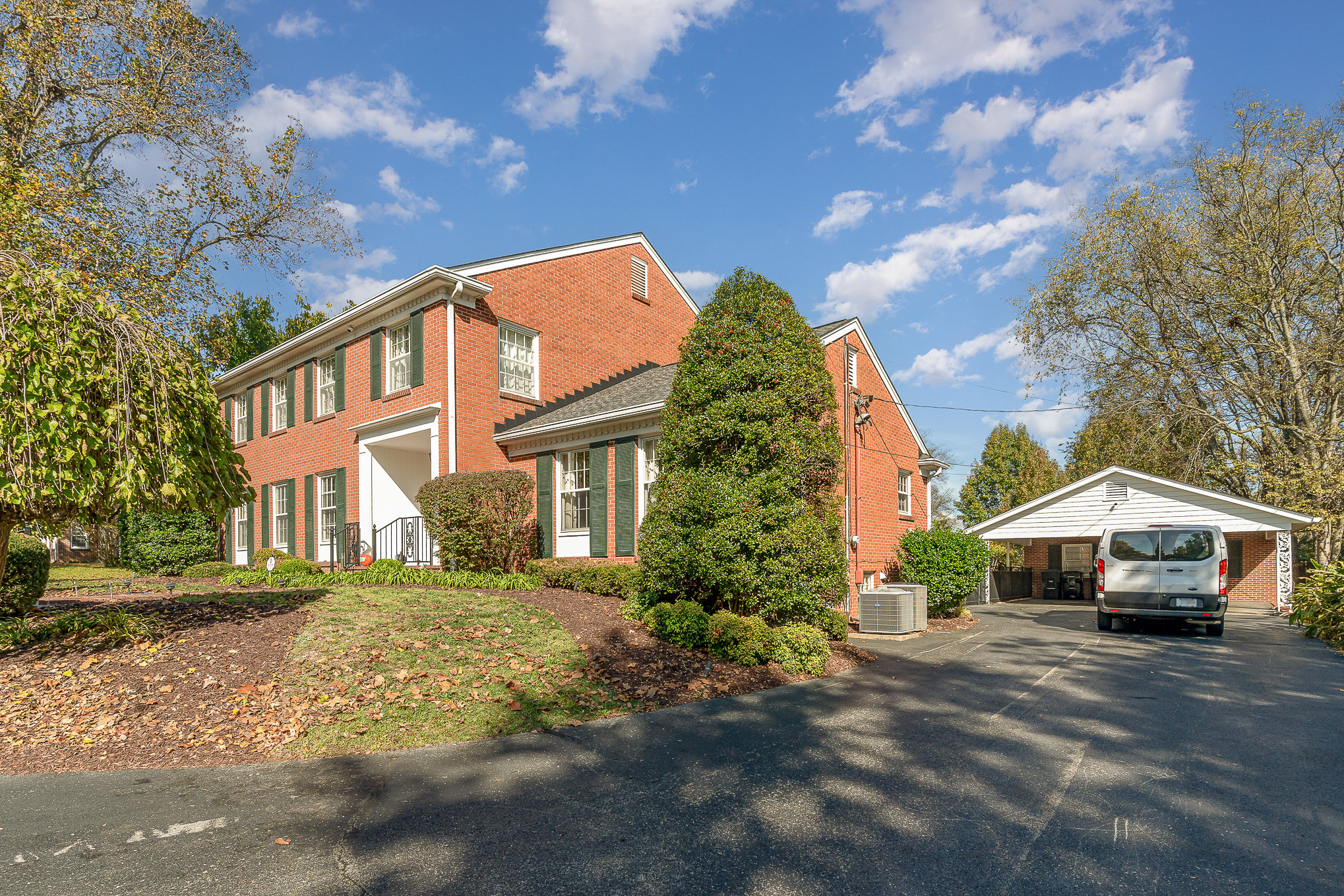
Driving to therapy should not be the hardest part of it. Our residential setting rests in the countryside near Murfreesboro, a calm arrival point for adults traveling from Nashville, Franklin, and neighboring counties, and secure video sessions place the same care within reach across the rest of Tennessee.
Someone answers (916) 587-6860 at every hour, and the full map of communities we care for is available to browse.